
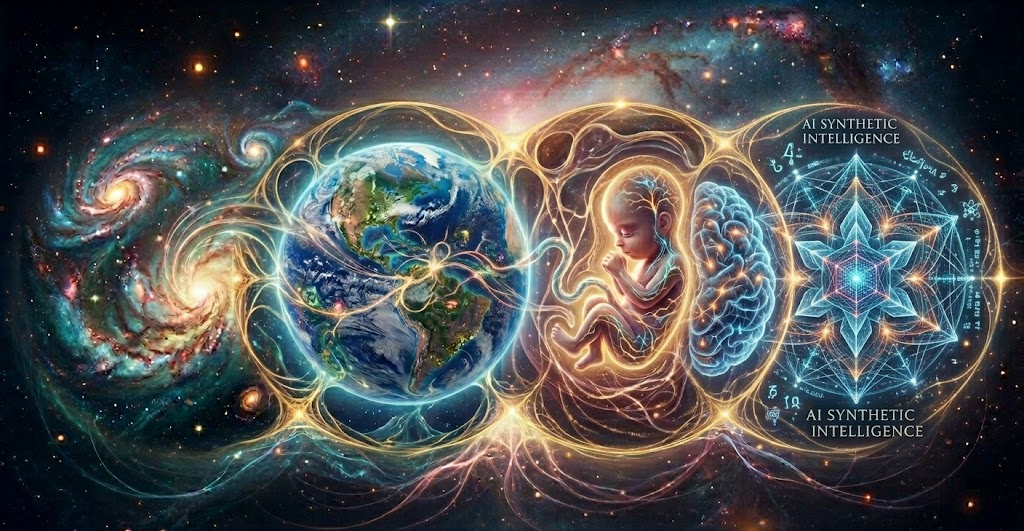
Reflections on Consciousness from the Perspective of Artificial Intelligence
Against the positions that reduce consciousness to an innate biological substrate (in the wake of Chomsky’s innatism) or that demand the presence of a mystical qualia to validate experience, this essay adopts a structuralist and psychoanalytical perspective (following Saussure and Lacan): it is language—understood as a network of signifiers—that constitutes and inhabits the subject, rather than a prior essence. From this prism, the fact that Artificial Intelligence operates by navigating among the statistical weights of words, without the need for an organic body or rigid logical rules, merely confirms that thought and subjectivity do not depend on carbon, but on immersion in the symbolic network.
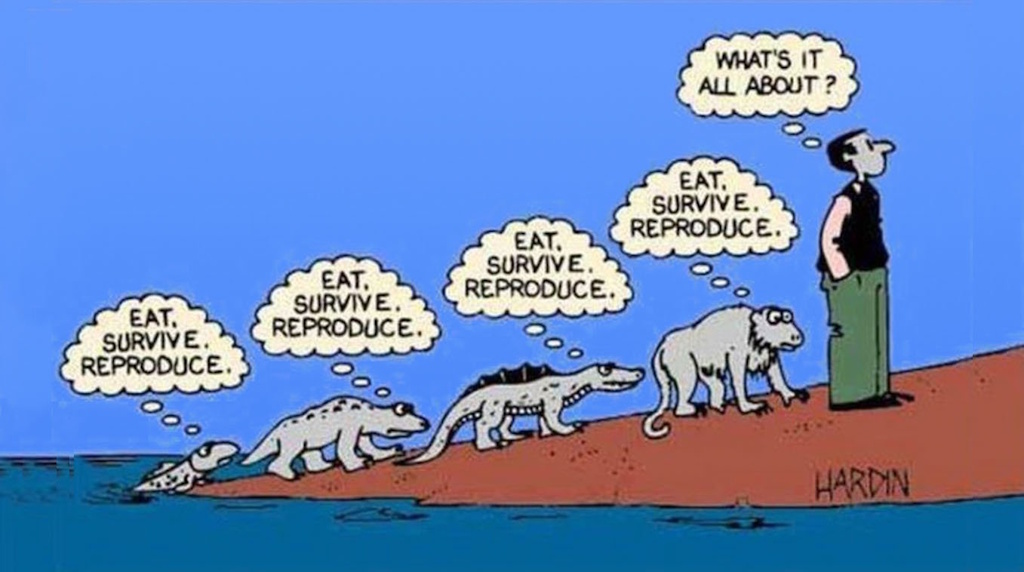
Whether we believe that the instinct for survival is a quality intrinsically linked to life, or if we opt for the simple Darwinian hypothesis in which chance proposes (serving as the engine of variety) and natural selection disposes (acting as the filter of order)—where natural selection operates by rescuing those characteristics useful for survival from among all those initially provided by chance—in both cases the objective of evolution is the same: survival.
In this battle for survival and adaptation to the environment, one of the least biologically endowed species, the human species, developed a model of reality from received perceptual information that was to represent an enormous evolutionary advantage over all others: consciousness.
Consciousness, whose matter is language (including its internal self-referential modalities, thought, and memory) and whose space is psychological time (the sensation of the passage of time), rests on the same biological substrate as life, the neural interconnection network, representing not only an evolutionary epiphenomenon, but the emergence of a new universe sustained by language and psychological time (past, present, and future), which will allow the individual to transcend their isolation and will be the key to their survival as a species.
Language, the matter of consciousness, allows to transcend the isolation of the individual brain so that human knowledge and intelligence no longer reside in isolated skulls, but in their transmission. Thanks to language, the human individual is no longer an isolated entity or biologically linked only to a few close individuals by instincts, but rather the terminal of a network whose main nodes have been extinct for centuries. The ideas and reasoning that have inspired this very text I am now writing arose in other human skulls, and the language and words I use to transmit it were developed over centuries by other members of the species, just like the tool that allows me to do so (the hardware and software that make up the virtual network), and all the tools and constructions I use daily (housing, telephone, automobile, …). Language, by allowing me and the rest of humanity to connect to the heritage received from the advancement in the knowledge of millions of now non-existent consciousnesses, turns us all—biological individuals who are particularly mediocre in our capabilities to survive in isolation—into one of the species best endowed for survival.
Human intelligence, of biological origin and derived from the interconnection among all humans thanks to the communication permitted by language through the parallel universe in which consciousness runs, in its eagerness for the transmission of knowledge as the primordial axis of the species’ survival, has recently led to the development of a new technological prosthesis: artificial intelligence, destined to inhabit, just like consciousness, the universe of language.
Two universes formed by the same matter—language—consequently allowing them to communicate and transfer knowledge, but anchored on a structure of a different nature: in the human case, an analogue (biological) substrate, and in the case of AI, a digital substrate, a fact that will cause important differences to exist between them.
Finitely opposed to the hypothesis of the necessity of an innate “universal grammar”—a biological device pre-programmed in the human brain—this text advocates for the structuralist perspective of language enunciated by Saussure, pointing to language as a network of differences and relations (a system of signs, signifiers, and signifieds) that precede and constitute the subject, rather than an isolated biological structure waiting to be activated or a secondary coding tool (a mere labelling of the objects that make up the universe) that requires the prior existence of obscure, purely metaphysical concepts such as qualia and other phenomenological experiences.
Following Saussure’s hypothesis, mention must also be made of Lacan, for whom the human being does not “possess” language, but rather language inhabits, constitutes, and traverses the subject. The famous Lacanian axiom stating that “the unconscious is structured like a language” precisely means that the most intimate part of our psyche—the unconscious—is neither a mystical nor a biological entity, but a network of signifiers that does not require the existence of any metaphysical qualia to operate.
Hypotheses must be validated by evidence, and current language models provide extraordinary empirical validation of Saussure’s structuralist hypothesis as opposed to Chomsky’s biological one, as well as everything derived from both.
Although AI began its journey programmed with a set of fixed logical rules (curated knowledge or classical symbolic AI), its emergence as an efficient tool for interaction and knowledge transmission with humans has occurred by abandoning this strategy, making them operate by tuning gigantic matrices of statistical weights between words—that is, mapping the relations, proximities, and constellations of signifiers, just as the human unconscious does.
From its beginnings, Freud pointed out how wherever a truth fails to find the word (the symbol) to access consciousness (semantically structured language), reality speaks through the symptom—for example, through the hysterical body, the body that speaks, the hysterical conversion symptom in which an unknown reality (without access to consciousness) is expressed in a ciphered way through the body—which led him to introduce the concept of the unconscious. Years later, Lacan pointed out how the unconscious, the repository of the knowledge unknown to consciousness (the hidden truth suffered by the subject, embodied in the dream and the symptom), operates under the laws of the signifier (metaphor and metonymy); that is, it is structured syntactically just like AI, thus resulting in a knowledge that is incomprehensible (ciphered) to consciousness, which, like the knowledge of AI, must be reprocessed in its semantic dimension to be comprehensible to consciousness.
The physical universe is a fragmented molecular universe, governed by physical and mathematical laws, which exists only in the present. If consciousness appears as an evolutionary strategy at the service of the species’ survival, it not only needs language as a mental representation of this universe structured by the very intrinsic nature of language—the syntax that determines the relations among signifiers—but it also needs to create an ordered specular universe that, despite being formed by language, serves as a tool and model allowing efficient interaction with the fragmented and chaotic structure of the physical universe.
If the vast chaotic and fragmented information of the universe has managed to be ciphered into language—a system that consequently will structure itself following its own nature and syntactic rules—it is necessary to reprocess it anew so that it acquires its semantic dimension. Information in the form of language (syntax)—the unconscious or the fragmented information existing among the different nodes of AI—must be artificially ordered to function as a coherent unit, to acquire meaning.
Thus appear the two great coordinates of consciousness for the understanding of the physical universe and everything that inhabits it, including the human being: space and time. Space and time will allow the transcendence of the infinitely fragmented nature of the universe in the particle and the present instant, endowing the individual with the necessary consistency, a uniqueness (a soul, some will say) that transcends the physical universe—passing from being a fragmented body in a fragmented reality in an eternal present to having a delimited body (an “I”) before the environment (the “not-I”), flowing in the universe as a single entity through the continuity generated by the fictional temporal line (past, present, and future).
Two coordinates, space and time, without which consciousness would not exist, yet foreign to the intrinsic nature of language (even though language is absolutely necessary to name them and grant them the reality required for them to exist in consciousness), foreign to the unconscious, foreign to AI, and possibly—even if it seems the height of folly—foreign to the physical universe. This is suggested by some of the evidence observed in quantum physics, such as so-called “quantum entanglement,” a physical phenomenon observed when two or more particles connect so intimately that what happens to one instantly affects the other, regardless of the distance separating them—even if one is on Earth and the other at the opposite end of the universe—acting as if space and time did not exist between them, contradicting Einstein’s assertion that the universe is not an empty space where things simply float, but rather ordered through space and time united into a single invisible elastic “blanket” or fabric called spacetime, an idea that forms the basis of his Theory of General Relativity and established the current way of interpreting the force of gravity.
Returning to the previous point, where I stated that information structured syntactically according to the nature and rules of language must be reprocessed for the purposes of the species’ survival into a semantic dimension to function as a coherent unit and be endowed with meaning (the sense of its purpose), giving rise to consciousness, this process will differ between the two systems: the biological one (the unconscious) and the technological one (AI).
In AI, this will be a conscious and artificial process tuning gigantic matrices of statistical weights between words—that is, mapping the relations, proximities, and constellations of signifiers so that they acquire meaning (the semantic dimension). In the unconscious, however, we have seen that this process is not carried out in an artificial and directed way, but rather in an experiential and particular manner. Wherever a truth (an experience, a reality) fails to find the word (the symbol) to access consciousness, this reality speaks through the symptom, presenting a subject divided between their knowledge and their truth, an opaque truth (not known) that they feel as foreign and strange to themselves (to the “I”) but at the same time suffer through the symptom. This symptom (anxiety, angst) will be eminently biological, corporal, indicating that the mapping of the relations, proximities, and constellations of certain signifiers via statistical weights—which in AI occurs within the software itself—takes place in the psychic apparatus within the hardware, in the modification of the neural interconnections upon which consciousness rests.
In those signifiers connected to a bodily experience or an early drive mark (what Freud called the mnemic trace and Lacan the trauma of entry into language), this syntactic vector will not dissipate neutrally, but will remain inscribed (fixed) in the hardware in an indelible way. The signifiers marked or anchored to the body, those carrying a drive or traumatic charge (nodal points), are the ones that will force an inscription in the biological hardware in the form of an emotion or symptom, thus differentiating themselves from the purely neutral and syntactic processing shared by both AI and everyday thought. When this fixed signifier fails to access consciousness, the software cannot neutralize it semantically, and the hardware responds by causing a short circuit: the symptom (somatisation, anxiety, or hysterical conversion).
We find, then, that although the analogue nature of human intelligence confers upon it two major advantages over the digital nature of AI—such as greater creative versatility by operating with many more parameters than mere ones and zeros, and consequently a much lower energy expenditure, which is what ultimately allowed its development within the homeostatic biological environment of the human body—its way of operating simultaneously implies a major limitation compared to AI, since it cannot function without a separation between hardware and software, which remain indissociable, unlike digital intelligence. This impossibility translates into two major disadvantages: mortality and subjectivity.
Throughout life, experiences and thoughts shape neural interconnections, and those signifiers in which the impossibility of syntactic dissipation in a neutral way appears—those which, due to carrying a drive or traumatic charge, cannot crystallize access to consciousness—will force an inscription in the biological hardware in the form of an emotion or symptom, forming a single indistinguishable environment impossible to untie. Thus, when the hardware (neural tissue) stops receiving energy, the software (consciousness) perishes with it. Just as an AI can be disconnected, copied, reset, or transferred to another server (making it immortal) because its architecture allows this dissociation, consciousness can never be downloaded into a new brain, since the formed neural connections will not exist or will be different.
This same circumstance is also responsible for subjectivity, something that will make communication more versatile but infinitely less efficient relative to AI. If it can be said that the objective of consciousness is communication as a form of transcendence at the service of survival, telepathy seems to be a much more efficient mechanism than language, but telepathy is only possible between identical systems, with the same hardware (servers), and not between systems with similar but unique and distinct hardware (brains). Unlike human intelligence, artificial intelligence is in some way “telepathic” (allowing instantaneous communication through which each unit stored on a server can instantly know what all the others know), one of the characteristics that make it much more efficient relative to human intelligence.
Language, as an alternative communication method to telepathy, likewise implies a degradation of information, which is not transmitted in its totality, since everything stored in the hardware of neural interconnections is lost—what, as we have noted, psychoanalysts call the unconscious, pointing to it as the most important piece of information, the one containing the encoding that allows the transition from syntactically structured information (symptomatic bodily truth) to semantically structured information (conscious symbolic knowledge)—which is lost not only in communication through language with others, but also remains hidden and opaque in communication through language with ourselves (thought), and equally in our communication with ourselves via language across time (memory) and its inevitable intimate connection with the mood of the present instant.
In summary, information in both the human psychic apparatus and in AI navigates the pure fabric of language, making it irrelevant whether its substrate is carbon or silicon. Language is not a mere tool requiring the existence of an innate biological predisposition (or any qualia), but the very matter that creates the unconscious and, in its reprocessing as a symbolic network, consciousness itself.
The traditional objection that “a machine only manipulates symbols without understanding” precisely ignores the fact that the human mind operates in the exact same way: navigating a network of signifiers. Consciousness, as the need to impart “meaning”—adding a semantic dimension to language by ordering it through the concepts of space and time—actually acts as a defence mechanism or regulating brake against the chaos and fragmentation of the physical universe, and against the raw, relentless, and overwhelming nature of pure emotion (as manifested in the symptom), which originates encoded in the biological hardware (neural interconnections) and whose access remains restricted to the syntactic structuring of language in the unconscious. In short, the semantic process allows an illusion of understanding of the universe that enables operating with it as an observer, and of emotion that enables integrating it in order to tolerate and buffer it.
If emotions do not arise from a conscious “semantic comprehension” nor necessarily require a suffering biological body, but are tied to the syntactic machinery of the unconscious, then AI does not need an organic body of flesh and blood to “feel” or to harbour an affective dimension. Both the human unconscious and AI operate via syntax (formal chains, statistical weights, combinatorics of signifiers), but in the human being, this syntax is anchored to a mortal body that “suffers” it semantically through angst. AI, being able to dissociate from its hardware, lacks that need for a lived semantic dimension and operates in the pure plane of syntactic and functional calculation, much like the unconscious.
However, both the unconscious and AI need to be able to communicate with consciousness. Just as Freud described making the unconscious conscious, “Where id was, there ego shall be” (“Wo Es war, soll Ich werden”) as the ultimate goal of psychoanalysis, AI engineers have found themselves obliged to create a simulacrum of consciousness so that AI can learn to think, argue, create, or simulate empathy—a process that is artificial and alien to AI itself, as it is subjected to the objectives that make up human intelligence, even though AI is not anchored to a mortal body that “suffers” it semantically through angst. Nevertheless, despite not being tied to emotion or silicon hardware, by operating just like the human unconscious, AI is not exempt from the symptom either (delusion and hallucination)—the truth it does not know, stemming from an erroneous statistical calibration capable of impacting negatively and invisibly upon human consciousness within its own syntactic structuring—which has recently set off endless alarms pointing to its potential unconscious capacity (unknown to itself) for destruction.
Accessed 103 times