
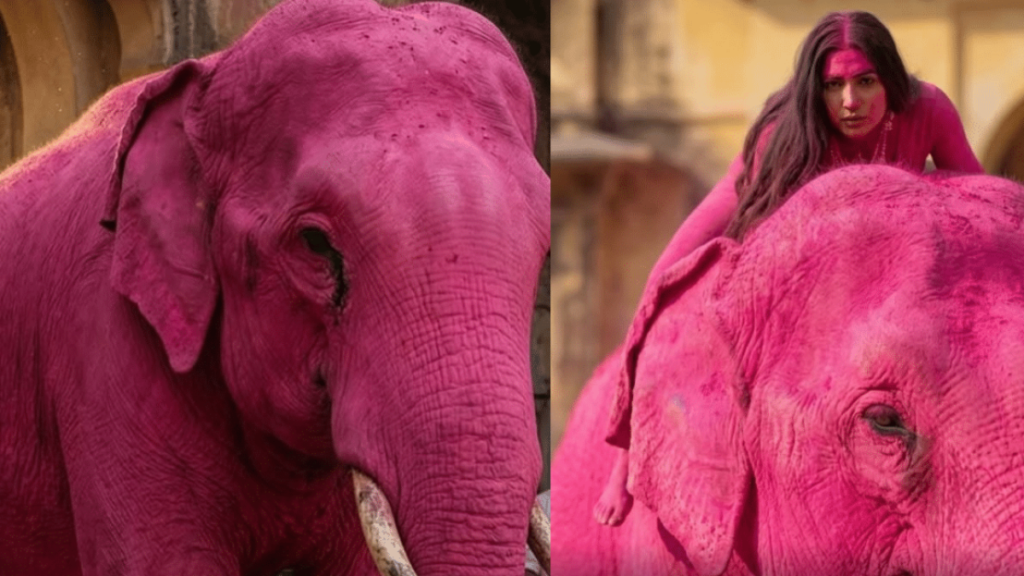
We have grown accustomed to horror being present in an almost routine manner in our lives. The presence of bombings, massacres, natural disasters, and other collective tragedies is so continuous that we end up accepting everything, provided we are supplied with a narrative logic capable of operating behind the tragedy —even if it is a twisted, destructive, disproportionate, and often false logic. The logic of horror allows us to isolate it and assimilate it as just another piece on the chessboard, belonging to dark criminal subworlds or almighty geopolitical interests that exceed our limits and capabilities. However, this mechanism fails when confronted with the incomprehensible horror caused by the banality of evil—the horror resulting from a terrifying empathetic void toward the other, usually a completely helpless being, such as an animal or a baby, as though this empathetic disconnection were not likewise present in major human conflicts.
In a way, just as humanity watched astonished and shaken during the trial of Adolf Eichmann—an SS Lieutenant Colonel in Nazi Germany and one of the main logistical organizers of the Holocaust during World War II—listening to the statements of a mediocre office clerk, a bureaucrat concerned with the efficiency of trains, promotions in his career, and strict compliance with regulations (a grey being, alienated from any glimmer of humanity, who in a democratic Germany might never have been more than a station master or a meticulous, invisible accountant) instead of the monstrous, sadistic psychopath full of hatred toward the Jewish people that everyone expected; so too on the internet, events frequently emerge capable of sparking a similar reaction of stupefaction and rage in many users.
Cases such as that of the Russian photographer who decided to paint an elephant pink—an animal that would die shortly thereafter—stripping her of her status as an elderly, sentient living being to reduce her to a striking object at the service of her supposed artistic creativity and portfolio; the owner and clients of a brothel in Indonesia who chained an orangutan to use her as a sex slave, prioritizing their economic interest and aberrant sexual release over the living hell of the poor animal; the minors abusing stray dogs in China, using the pain of innocent beings as display objects to serve their craving for notoriety; or the mother in Cleveland, United States, who went on holiday to Puerto Rico to enjoy the sun and beach, leaving her 16-month-old daughter completely alone at home to die an agonizing death of starvation while the mother posted selfies on social networks to record her wonderful vacation—all terrify because, in their delirium, they exhibit a dreadful mental and empathetic void.
All of them are characterized, in one way or another, by objectifying and sacrificing completely helpless beings—animals or babies—to their own selfishness, and, most terrifyingly, doing so from their own objectification and “dehumanisation.” Neither did the photographer hide the images of her abject advertising campaign, nor the minors their despicable videos, nor did the mother conceal her complete empathetic incapacity by showing how happy she felt. Quite the contrary: in their emptiness and blindness, they displayed it expecting to receive a degree of recognition for it—a “like.” They had all become monsters, victims of their own “dehumanisation,” of their delusion from having exiled themselves from the coordinates of the real world to inhabit a liquid world filtered by the self-complacency of the “ego,” by the omnipresence of “the same”—everything that returns our own reflection and pushes us to desert ourselves to become its reflection—whose ultimate price is the disappearance of alterity, the gaze of the “other” that demands moral responsibility. When the “other” disappears, our empathy and ability to feel and process another’s pain disappear as well. The animal or the child is no longer a subject with all that implies, but a mere object for our artistic vanity, our enrichment, our desire for fame, our sexual release, or an obstacle to our craving for entertainment.
However, the very empathetic void that blinds them to the horror inflicted likewise blinds them to the horror of the liquid world they inhabit—which, just as it feeds on the horror of the banality of their actions, feeds on the moral lynching it triggers and will devour them with the same pitilessness and cruelty they exhibited.
Through the indignation and rage sparked by their cruelty, in an elementary desire for retributive justice derived from the biblical “an eye for an eye” that often bears a suspicious resemblance to the initial horror, the abuser who objectified the helpless being into a mere tool serving their narcissistic craving will be objectified into a social outcast—an absolute monster—at the service of the majority’s craving for restorative justice. This functions as a rigid psychological defence mechanism against the panic of one’s own banality, certifying that despite inhabiting the same liquid world, one does not occupy the place of the monster, but rather that of the hero who fights and dignifies it. The monster, subjected in their own flesh to a form of divine justice, will experience their entire life being reduced to the monstrosity committed, through a supposedly self-justified violence that will stop at nothing, destroying their professional career and, if possible, their entire life—being exempt from any kind of empathy, since its appearance, even if minimal, would undermine the counter-identificatory defence of the vigilante mob.
The virtual collective lynching ends up becoming a massive replication of the banality it fights against: a collective projection of the terror that the monster might not be as different from an ordinary user as one would wish; a disproportionate cruelty in which individual responsibility and guilt are diluted under the protection of the crowd. Amplified fury and rage in which the crowd burns its own superficiality, its own banality at the stake. A collective catharsis in the face of one’s own banality, mediated by hatred towards the banality of others, wherein the more violent the destruction caused to the monster, the more immune the lynching mob of heroes feels against its own meanness.
The lynching mob, in a process of systemic dehumanisation that strips the subject of their individuality and critical thought, ultimately becomes a bureaucrat of the algorithm, executing its “sentence of hatred” convinced of being the hero who slays the monster, unaware that it is merely another cog within the very same dehumanising machinery.
Despite this, the horror of banalisation does not stop here; it will continue traversing ever darker and gloomier paths, resurfacing in the form of viral videos flooding the web, such as those in which alleged rescuers of abandoned puppies covered in hundreds of swollen ticks painfully removed them while asking for donations to continue their charitable work—until it was discovered that the alleged ticks were seeds and fruits previously embedded using hot glue into their eyes, ears, and skin. Or it will reach its zenith in phenomena like the case of the so-called “Butt Girl,” a regular character on one of the most infamous websites of all time on the internet, “IsAnyoneUp.com”—a revenge porn website where any spurned man could upload intimate photos of women along with their real names, links to their social media, and addresses with the aim of destroying their reputation and lives in revenge for being rejected (as documented in Netflix’s “The Most Hated Man on the Internet”).
Oblivious to the cruelty of the website, in an example of how emptiness and solitude can colonize the mind of the victim herself, the “Butt Girl” ended up dehumanising herself, accepting her own objectification (becoming the “butt girl”) as the price paid to experience a false sense of community. Despite being treated as a sideshow object, destined to display her bottom to satisfy the sadistic mockery of those present, in the toxic attention received through the gaze of the executioner, the “Butt Girl” found her validation—that which allowed her to exist. In humiliation, she found the only way out from the pain of her irrelevance, and in her longing, she preferred to become the distraction of a circus of psychopaths rather than return to the painful solitude of being nobody in the real world.
Just as the “Butt Girl” and all of that was nothing more than a crude circus spectacle that ultimately brought about its own annihilation, this extreme need for validation has subsequently been exploited in certain infamous private platforms and forums—where humiliation is disguised as financial compensation—such as so-called “Trash Streaming” or “Degradation Streaming.” Through a dynamic system of “live bets and challenges,” viewers pay cryptocurrency or real money via donations to force vulnerable content creators to self-humiliate, consume lethal substances, or inflict physical harm upon themselves live on stream.
However, its very essence can also be found in networks that claim to be more sophisticated and seem to have been accepted as a “business opportunity,” in which hundreds of alleged content creators—which often amounts to little more than disguised pornography, especially affecting women—are driven by the pressure of users (“clients”) and the algorithm to become the marketing managers of their own dehumanisation, crossing boundaries they never thought they would cross and auctioning off their privacy step by step to maintain their income. Alleged beneficiaries of platforms—offered to prospective resource-poor entrepreneurs as an opportunity to gain money and fame quickly and effortlessly—who become their hostages from the very first moment: a product whose value is measured online through a monthly subscription to their intimacy, turning them into objects subjected to a devastating process of banalizing their body and psyche, along a path of abjection that seems to have no end.

Accessed 128 times